
How to Abhyanga (Ayurvedic Self-Massage)
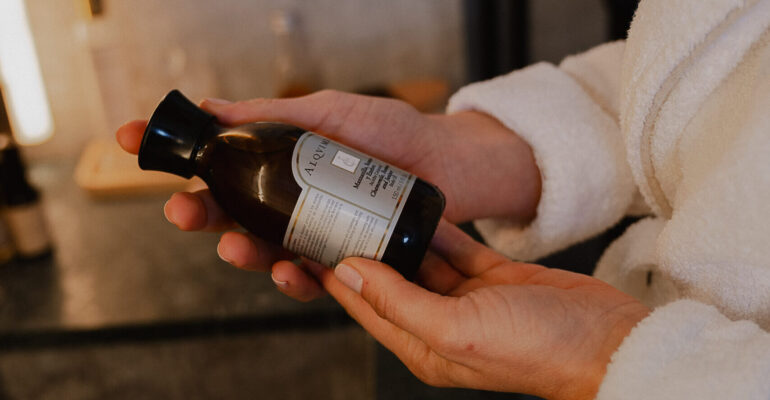
The Ayurvedic Self‑Massage Ritual for Deep Relaxation & Well‑Being
The first time I tried Abhyanga, I couldn’t believe I hadn’t been massaging myself all along and it became one of my favorite self-care rituals. The key is to warm your oil, choose the right oil for your Dosha and listen to your body. And I promise you the best sleep of your life!
Here’s how to do it, with massage directions, oil recommendations and tips to make it part of your routine.
Step 1: Warm Your Oil
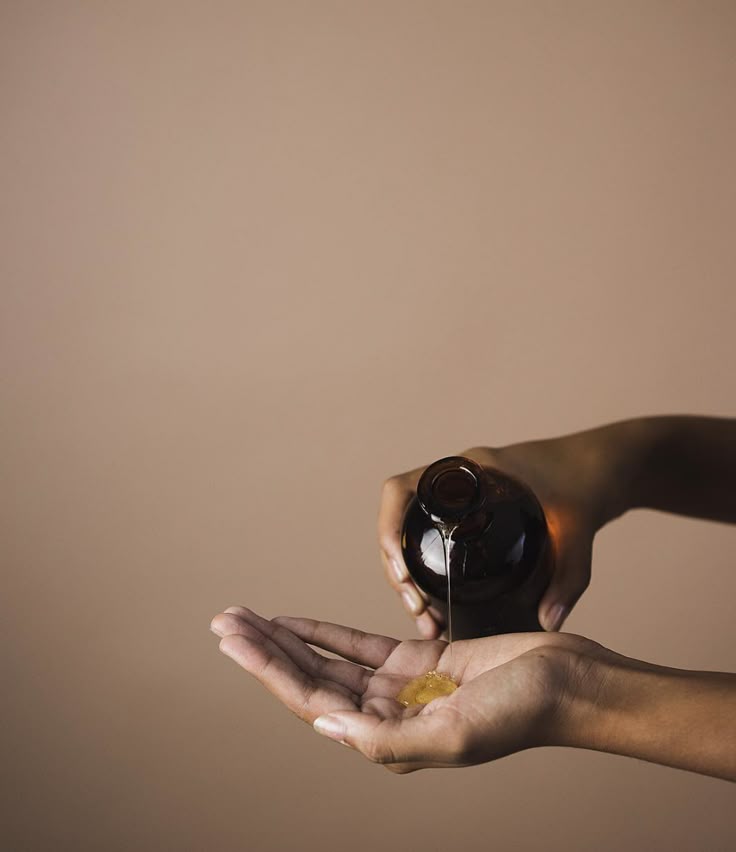
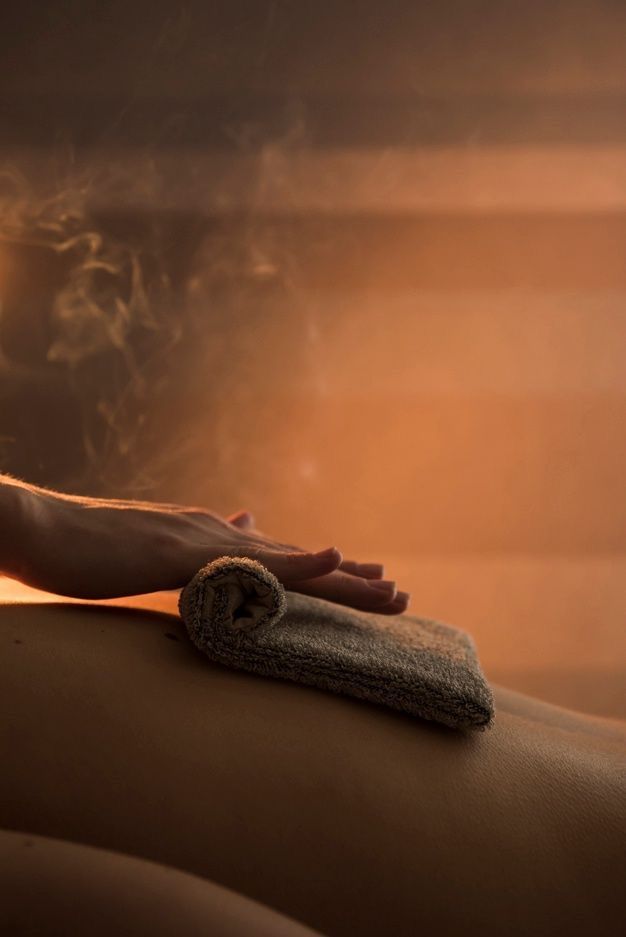
Warm oil improves absorption into the skin and increases the feeling of warmth and safety so you feel a deeper relaxation.
Place the bottle in a pot or bowl of hot water. You can use sesame, coconut, almond orjojoba oil as a base oil. Check below to find the oil for your mind‑body type and if you don’t know, take the Dosha Quiz to find out your type.
Step 2: Set the Mood

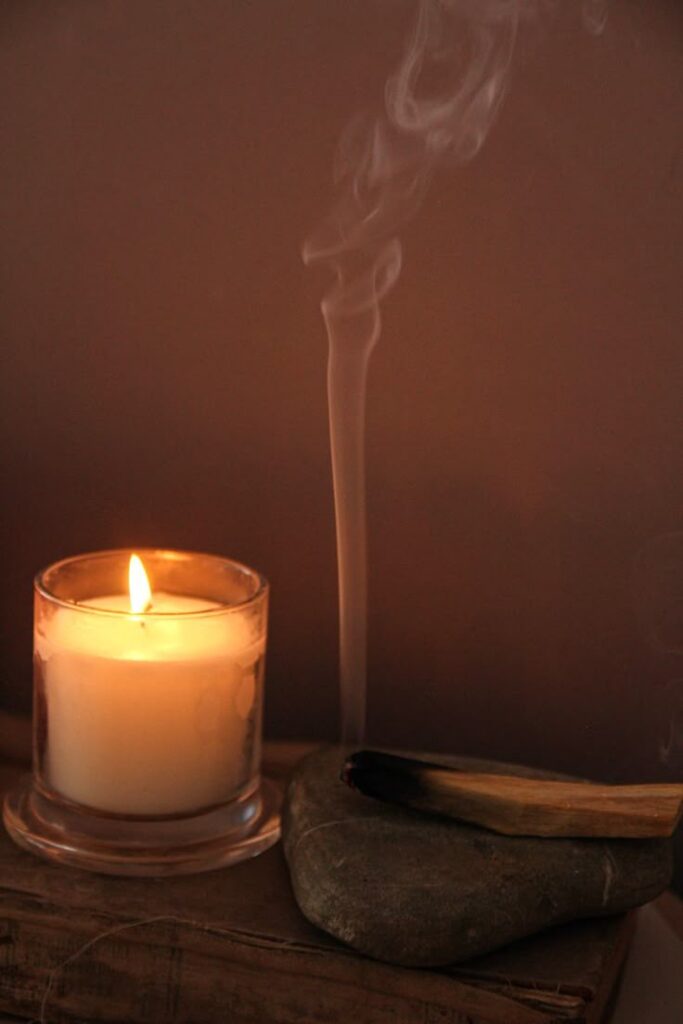
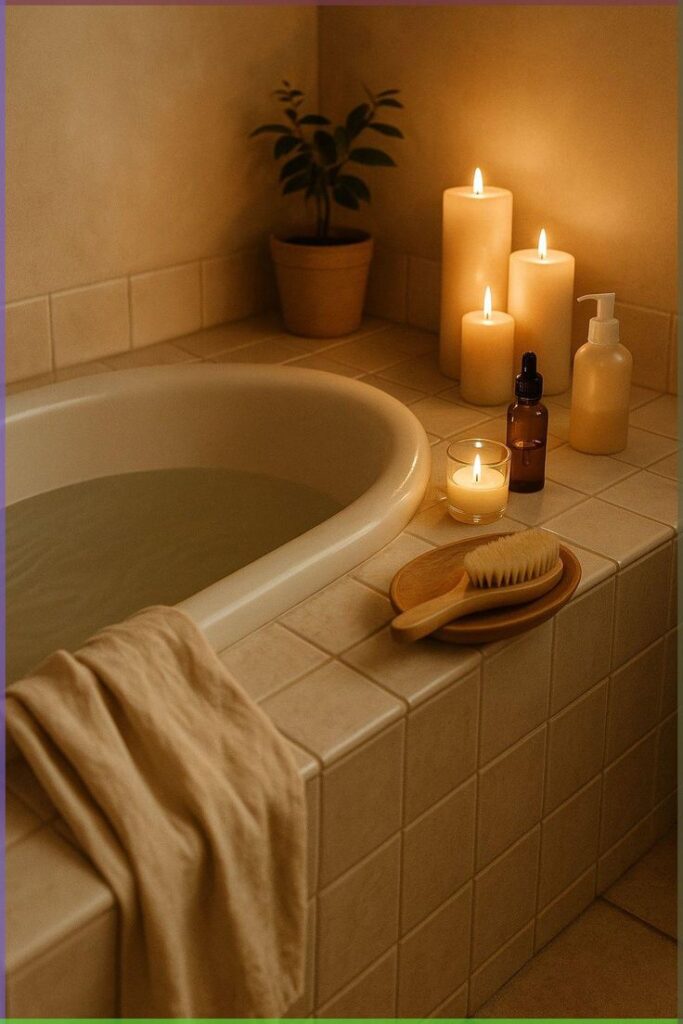
Put on some soft music, dim the lights, light some candles and a calming scent so your nervous system can start to relax.
This is your self‑love ritual, so set the tone! I usually like piano tunes and here a playlist that I love.
Step 3: Massage From Head to Toe
You can adjust pressure based on what feels supportive for your body but for lymphatic drainage a softer touch is recommended so you move fluid without compressing delicate lymph vessels.
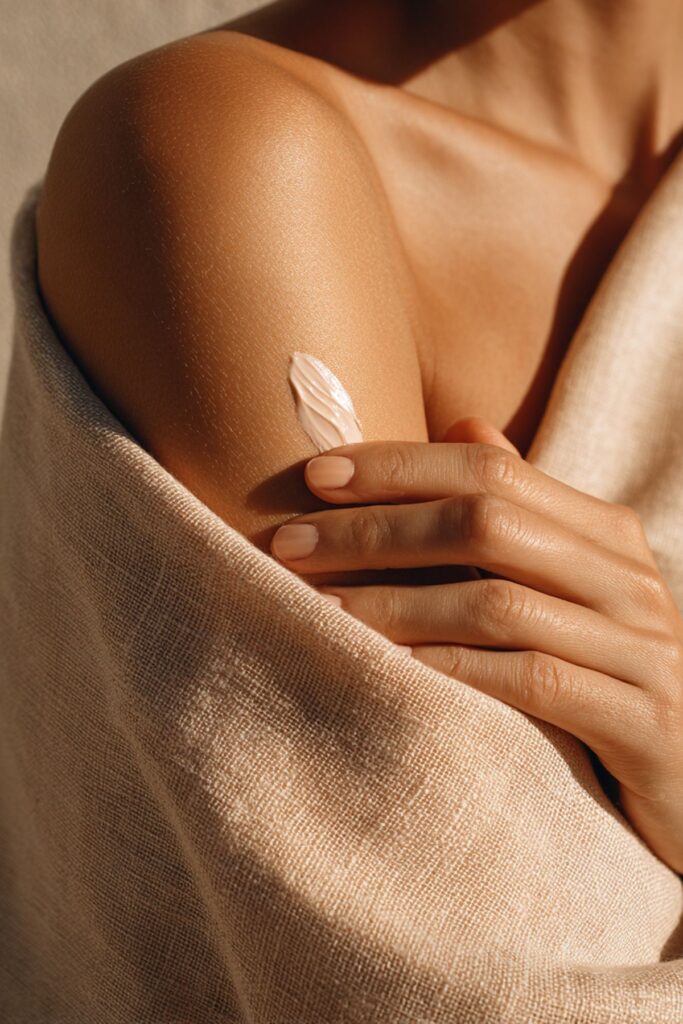
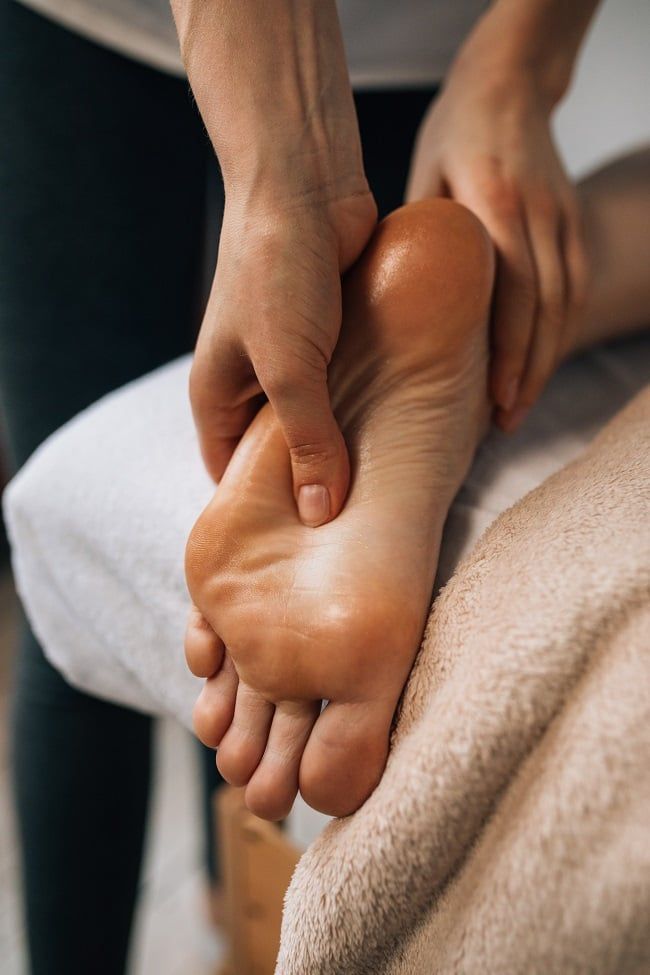
Start from your head and work your way down. Direction tips to support lymphatic flow and a gentle detoxification:
Arms & Legs:
• Use long, smooth strokes along the length of each limb, moving toward major lymph node areas like the armpits and groin. Light pressure is best for lymph flow.
• At the joints (shoulders, elbows, knees, ankles) use circular movements to nourish the joints and improve mobility.
Torso & Belly:
• Gentle circular movements on the chest and toward the heart on the torso.
• On the belly, clockwise circular motions that follow the natural digestive flow.
Feet & Soles:
• Give extra attention to the feet and soles; these areas contain many nerve endings and marma points.
Step 4: Stay Present & Let Your Body Guide You
Abhyanga is a practice of listening to your body and actively showing yourself love with your own touch.
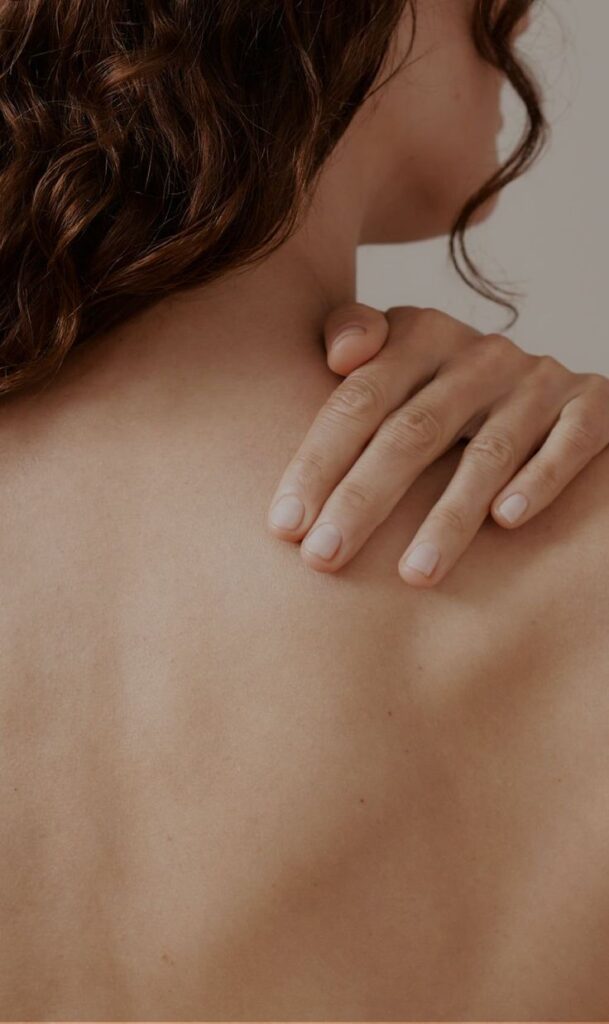

So, when you are touching yourself, besides the directions and pressures, just listen:
- Where does your body want attention right now?
- Which parts need your touch?
- Where does it ask for a bit more pressure?
- Where is tension ready to soften and let go?
Base Oils for Each Dosha
In Ayurveda, oil isn’t just a tool, it’s medicine for the skin and nervous system.
Oil in Sanskrit is “sneha,” a word that means both “oil” and “love,” so the ritual itself becomes an act of compassion.
Choosing the right oil based on your Dosha type deepens the effects: warming oils help balance dryness and nervous tension, while lighter or cooling oils soothe heat and irritation.
- Vata: sesame oil with warming botanicals like lavender, sweet orange or vetiver.
- Pitta & Kapha: lighter or cooling oils like almond, coconut or jojoba with rose, sandalwood or geranium.
👉 Not sure which one to choose? Take the Dosha Quiz to find out.
Why Abhyanga Matters
Abhyanga is more than a massage. It’s a self‑nourishing, grounding ritual.
- Calms the nervous system: The warm oil and rhythmic pressure activate your body’s relaxation response. I guarantee some of the best sleep and deepest relaxation of your life.
- Improves circulation & lymph flow: The strokes help boost blood flow and lymphatic movement, so you literally feel it down to your cells warm, calm and alive.
- Nourishes skin, hair and joints: The oil penetrates deeply, hydrating and softening the skin, strengthening tissues, and lubricating joints to help you glow from the inside out. Rich in fatty acids and vitamins, it also supports and protects the skin’s natural barrier.
- Detox support: Massage motions help move stagnant fluid and encourage lymphatic drainage, it shows up as a nice glow and smile in your face afterwards.
- Balances the Doshas: Especially amazing for grounding restless Vata energy and at this time of year when Vata’s cold, dry, light qualities are at their peak, it helps balance dryness, nervous tension and scattered energy.
- Better rest and clarity: Sleep improves, mind feels calmer and thoughts settle into clarity with regular practice.
Whether you do it in the morning to energize or in the evening to unwind, even a short practice can calm your nervous system, restore balance and renew your connection with your body.
Ready to Make Abhyanga Part of Your Routine?
Here are a few ways to deepen your experience:
✨ Start with intention. Deciding why you’re doing what you are doing helps you stay consistent and comitted. Know your why: is it better sleep, smoother skin or a calmer mind & grounding?
✨ Create a checklist. Prepare your space, warm your oil and set a short ritual sequence you can repeat.
✨ Reflect on your experience. Notice how you feel before and after each session in energy, stress levels, sleep quality and skin feel. This reflection helps you feel the effects of and motivates you to be consistent in your practice.
✨ Pair it with breathwork or meditation. After Abhyanga, your nervous system is receptive this is a great moment to slow down with breathwork or a short meditation.


